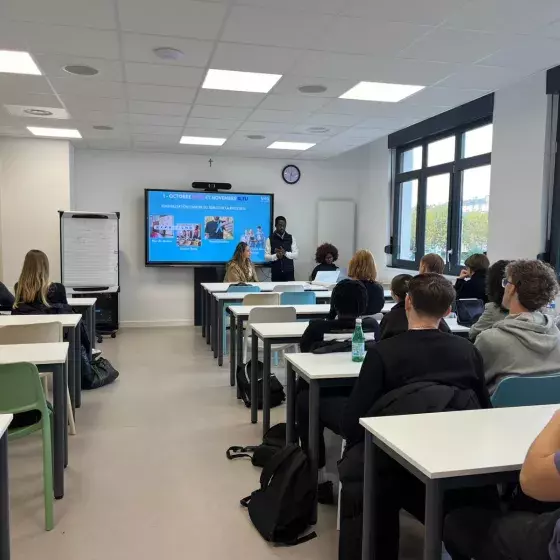
The strength of a business school in general, and of the Grande Ecole Programme in particular, lies in the high level of employability it gives its graduates. For example, 88% of Ipagians find their first job in less than 6 months (source: 2022 integration survey). However, their career paths once they have completed their course are very varied, both in terms of sector of activity and profession. So here's a brief overview of the job opportunities and professions practised by the young - and not so young - alumni of the top business schools...
Marketing and communication
Marketing is one of the main areas of study at a business school. You may work in operational marketing (product manager, group manager, digital brand manager) or strategic marketing (research manager, strategic planner). These professions have been constantly evolving since the advent of digital technology, and today's leading business schools are responding to the needs of companies in this area by offering their students specific specialisations for each of their programmes.
Sales and marketing
All companies need salespeople. Many business school graduates therefore choose this career path. In fact, it is not uncommon for some marketing positions to require prior experience of working in sales teams, so as to get a feel for the realities "on the ground". In this field too, certain functions are operational - sector manager, business developer - while others are more 'strategic', such as sales analysis or planning. With the boom in e-commerce, young professionals who took a digital-focused course during their schooling are increasingly fast-tracked into positions of great responsibility.
Finance and management
This field includes a very wide range of professions: auditor, risk manager, management controller, merger and acquisition advisor, portfolio manager, trader, back office manager, chartered accountant, statutory auditor, asset manager, etc. They can be divided into three main categories: market finance, corporate finance & audit and wealth management, all of which are specialities offered in 5th year of IPAG's Grande Ecole programme.
Human resources
Today, human resources management is at the crossroads of several areas of expertise: management, law and strategy. HR departments are no longer just responsible for recruitment and payroll; they are also in charge of employee training, industrial relations and respect for diversity within the company, now known as inclusion. That's why companies are now often looking to graduates of business schools to fill these kinds of positions, which can range from international mobility manager to internal communications officer to diversity manager or chief happiness officer, and perhaps even to HR director later on.